 Fordel Studios
Logistics
Route optimization AI proved its unit economics at UPS — $400M+ in fuel savings from ORION, which isn't a pure ML system but a hybrid of ML prediction and constraint-based optimization using operations research. Autonomous trucking is commercially real: Aurora launched driverless freight on the Dallas-Houston corridor in April 2024, and Kodiak Robotics is running similarly geofenced operations. The driver shortage (80,000+ gap in the U.S.) is the forcing function compressing regulatory and commercial timelines faster than the technology would on its own. The question now is whether the software integrations being built are grounded in what's operationally real today, not what autonomous fleets might look like in five years.
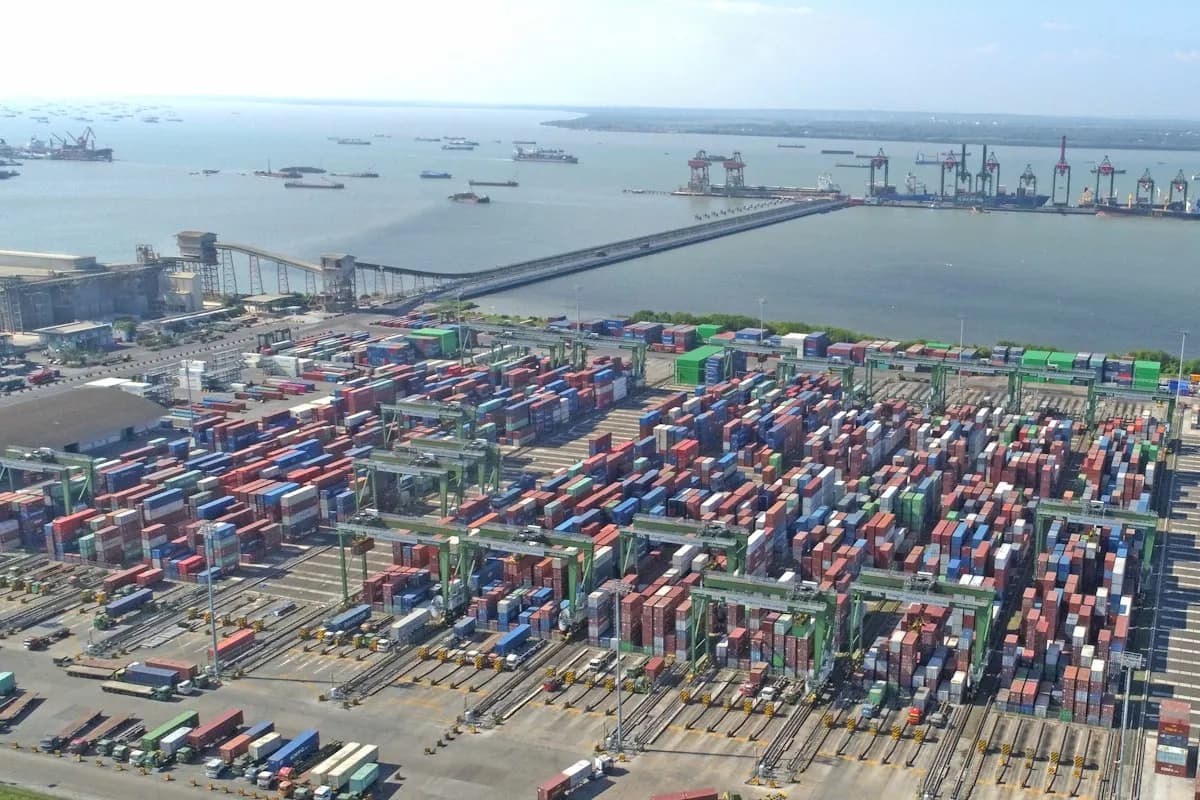
Logistics AI has moved from pilot to production across the stack. UPS ORION's fuel savings are documented. Aurora has commercial autonomous trucks on specific U.S. corridors. Amazon Sparrow is picking individual items at fulfillment scale. The gap is not AI capability — it is execution integration. Most logistics AI initiatives produce better plans than the current process and then hand those plans to operations teams who enter them manually into TMS and WMS systems. That manual re-entry step is where the value evaporates.
The Execution Integration Requirement
SAP TM, Oracle TM, and MercuryGate each have different API architectures, data models, and write capabilities. Building AI systems that read planning inputs from these systems and write approved plans back into them requires sustained integration engineering investment. It is not glamorous work, but it is the work that separates logistics AI that changes operations from logistics AI that impresses in demos and sits unused in production.
The same integration problem applies to warehouse robotics. Amazon Sparrow and Locus Robotics generate telemetry at rates that traditional WMS batch-processing pipelines cannot ingest. A warehouse automation deployment that does not include real-time streaming data infrastructure for robotics telemetry will create blind spots in inventory accuracy that compound over time.
Autonomous Trucking: What Is Real Now
- Aurora commercial operations: Dallas-Houston corridor, no safety driver, production freight — real and operating
- Kodiak Robotics: similar commercial operations on defined routes — real and operating
- TuSimple: collapsed in 2023 — the cautionary case for timeline overconfidence and regulatory friction
- Nuro autonomous delivery: limited geography, regulatory approvals required per city — real but geofenced
- Starship Technologies: campus and suburban last-mile pods — real in specific deployment contexts
- Arbitrary-route SAE Level 4 autonomy for general trucking: not yet commercially available at scale
Deploying Logistics Optimization AI
Aggregate real-time shipment, carrier, and warehouse data into a single operational data store before building optimization logic. Logistics AI cannot optimize what it cannot see — and most logistics operations have data siloed across TMS, WMS, carrier portals, and email.
Enumerate all hard constraints: HOS, hazmat restrictions, time windows, vehicle capacity, autonomous vs. human-driven lane distinctions. Encode these before building any ML optimization layer. Constraints that are not encoded will be violated.
The TMS write-back integration timeline frequently exceeds the model development timeline. Starting integration architecture in parallel, not after model development, prevents the planning-to-execution gap that kills logistics AI deployments.
Deploy with AI making recommendations that operators approve before execution. Measure approval rate and override rate. Expand autonomous execution scope only when the approval rate is consistently high and overrides are concentrated in well-understood edge cases.
- 01
Last-mile route optimization at fleet scale is a constraint satisfaction problem with noisy real-time inputs — traffic, weather, time windows, HOS rules, hazmat restrictions — that pure ML approaches don't reliably solve because feasibility constraints can't be learned as reliably as they can be encoded. Production systems need hybrid architectures: ML for prediction, constraint solvers (OR-Tools, CPLEX) for routing.
- 02
The bullwhip effect hasn't been solved by AI demand forecasting because most tier-2 and tier-3 suppliers still share data on weekly or monthly cycles. Multi-tier demand signal synchronization is a data access and commercial agreement problem before it's a modeling problem.
- 03
Autonomous trucking (Aurora, Kodiak) is geofenced and exception-heavy — FMCSA regulatory uncertainty, defined corridors, and TuSimple's 2023 collapse document what happens when integrations are built assuming full arbitrary-route autonomy on short timelines.
- 04
Warehouse robotics (Amazon Sparrow, Locus Robotics, 6 River Systems) generates telemetry at rates most WMS platforms weren't designed to ingest. The data pipeline architecture needs real-time streaming from the start — retrofitting batch-oriented WMS systems to handle autonomous robot telemetry is a significant re-architecture.
- 05
Predictive maintenance requires IoT sensor infrastructure on fleets that weren't instrumented from the factory. The sensor retrofit and data pipeline work is a prerequisite for the AI, not something that can run in parallel with model development.
- 06
Port congestion prediction (Windward AI) requires AIS data, berth scheduling data, and vessel operator behavioral data across dozens of ports. AIS is public; the rest requires commercial data access agreements that are as hard to close as the modeling work.
We model HOS constraints in route optimization implementations, not as a post-processing filter. Plans that ignore FMCSA Hours of Service rules produce routes drivers can't legally execute — we build the constraint encoding into the solver, not the UI.
We don't build carrier connectivity from scratch. Supply chain and TMS integrations use existing carrier network APIs — project44, FourKites — because carrier connectivity is a commodity. The differentiation is in planning and optimization logic on top of it.
We start predictive maintenance engagements with a sensor audit, not model development. If the fleet isn't instrumented, there's no data to model — and retrofitting sensors mid-project is how schedules slip.
We've worked directly with SAP TM, Oracle TM, and Samsara fleet telematics APIs. We know where the data is, what format it comes in, and what the write-back constraints look like before we design a system.
Supply chain digital twin work starts with the data aggregation layer — TMS, WMS, carrier APIs, supplier portals — before touching the simulation model. Most digital twin initiatives fail at the data layer, not the modeling layer, and we sequence the work accordingly.
01Route Optimization Is a Constraint Satisfaction Problem, Not a Pure ML Problem
UPS ORION's $400M+ fuel savings came from operations research-driven optimization with ML for demand and travel time estimation — not from an end-to-end ML model. The vehicle routing problem with time windows, HOS constraints, capacity limits, and hazmat restrictions is combinatorial. Pure ML doesn't reliably produce feasible solutions because hard constraints can't be learned as reliably as they can be encoded. Production systems that work use hybrid architectures: ML for prediction under uncertainty, constraint solvers (CPLEX, Google OR-Tools) for the actual routing decision.
02Autonomous Trucking: Aurora Is Real, TuSimple Is the Cautionary Tale
Aurora launched commercial driverless freight on the Dallas-Houston corridor in April 2024 — real freight, no safety driver, defined corridor. Kodiak Robotics is operating similarly. TuSimple collapsed in 2023 after regulatory scrutiny, financial mismanagement, and overpromising on timeline — it's the documented outcome of assuming arbitrary-route SAE Level 4 autonomy on a two-year window. The lesson isn't that autonomous trucking is vaporware; it's that geofenced operations on high-volume corridors are commercially real now, while full-fleet arbitrary-route autonomy is still years away. Integrations need to be built around gradually expanding autonomous lane coverage, not a wholesale fleet replacement.
03Supply Chain Digital Twins Are an Infrastructure Problem First
The term gets applied to everything from dashboards to full simulation environments, but the architecturally significant version is a live simulation model — inventory positions, carrier capacity, demand signals, disruption events — that can run what-if scenarios faster than the real supply chain can respond to them. Coupa and o9 Solutions have built commercial products in this direction. The prerequisite is aggregating real-time data from TMS, WMS, carrier APIs, and supplier portals into a single operational data store. Most digital twin initiatives fail at that data aggregation layer, not the simulation model — and sequencing matters.
Aurora and Kodiak expanding geofenced commercial autonomous trucking operations — the 80,000+ driver shortage in the U.S. is the forcing function accelerating both regulatory clarity and commercial deployment timelines
Mid-market fleet route optimization — UPS ORION proved the unit economics a decade ago; tooling costs have dropped enough that carriers running 200-500 trucks are now the active deployment target
Predictive maintenance converting unplanned fleet downtime to planned maintenance windows — vibration, temperature, and current signature monitoring detecting failures 2-6 weeks out on instrumented fleets
Warehouse robotics scaling from pilot facilities to standard fulfillment deployments — Locus Robotics and 6 River Systems reducing direct labor dependency in high-SKU fulfillment environments
Supply chain digital twins (Coupa, o9 Solutions) replacing static S&OP cycles with continuous simulation and real-time disruption response
Port congestion prediction (Windward AI) improving vessel ETA accuracy through AIS and operator behavioral data integration — compressing dwell time uncertainty for import-dependent supply chains
- 01
Route optimization models that don't encode HOS constraints — plans that look optimal in the solver are illegal for drivers to execute under FMCSA regulations, and the gap doesn't show up until dispatch
- 02
Autonomous trucking integrations built for arbitrary-route SAE Level 4 autonomy on a two-year timeline — Aurora and Kodiak operate on defined corridors under regulatory exemptions; TuSimple's collapse in 2023 is what timeline overconfidence looks like at scale
- 03
Demand forecasting pipelines without structural break detection — the model is most wrong during the supply chain disruption events when accurate forecasting has the most operational value
- 04
AI planning tools with no TMS or WMS write-back — a gap between AI plan and execution system that manual reconciliation can't close reliably at fleet scale, particularly during disruptions
- 05
Building carrier API integrations from scratch instead of using network APIs like project44 or FourKites — carrier connectivity is a solved commodity problem; rebuilding it delays the actual differentiation work by months
Trucking and fleet operations run under FMCSA — Hours of Service rules enforced via ELD mandate, autonomous vehicle exemptions (Aurora and Kodiak operate under exemptions subject to revision), and PHMSA hazmat routing and documentation requirements. International logistics introduces CBP customs compliance, Census Bureau AES filing, and active Section 301/232 tariffs that AI planning systems have to account for in cost models. California AB5 and similar gig economy laws affect carrier classification on logistics platforms using independent contractors, and any AI driver monitoring system that interfaces with ELD data carries its own FMCSA data access obligations.
We build logistics AI that integrates with execution systems — route optimization with TMS write-back, not plans that hand off to a manual dispatch process. Optimization implementations include HOS constraint modeling, real-time traffic integration via HERE or Google Maps APIs, and direct API write-back to TMS platforms so the AI plan and operational execution stay in sync. For supply chain visibility and digital twin work, we build on top of existing project44 and FourKites carrier network integrations rather than re-solving carrier connectivity. We've worked with SAP TM, Oracle TM, and Samsara directly — the integration patterns are known, not estimated.
Ready to build for Logistics?
We bring domain expertise, not just engineering hours.
Start a ConversationFree 30-minute scoping call. No obligation.