 Fordel Studios
AI Solutions for Regulated Industries
Compliance constraints, legacy systems, domain vocabulary — we know them before discovery.

Insurance
InsurTech 2.0 is consolidating fast — the carriers absorbing distressed startups are inheriting distribution and technology while discarding the loss ratio blindness that caused the collapse. What's emerging is more durable: parametric AI underwriting, embedded insurance via API, and agent-first claims pipelines that handle FNOL through payment without a human adjuster in the loop. The carriers that win this decade will be the ones that treat AI governance as an engineering discipline under the NAIC FACTS framework, not a compliance task to handle after deployment.
Explore
Legal
GPT-4 passed the bar exam at the 90th percentile. Harvey AI has raised over $100M. CoCounsel is now Thomson Reuters. The legal AI market is not experimental anymore — it's consolidating, and the firms that locked in infrastructure early are pulling ahead on turnaround time and margin. The open question isn't whether AI belongs in legal workflows. It's whether your firm controls the implementation or inherits someone else's architecture decisions.
Explore
Healthcare
Healthcare AI is past the proof-of-concept phase. Ambient scribes are in production at major health systems, prior authorization automation has a regulatory mandate behind it (CMS FHIR rule, 2027), and revenue cycle AI is delivering measurable ROI without requiring FDA clearance. The engineering challenge isn't AI capability — it's building systems that handle PHI correctly at every layer, integrate with fragmented EHR infrastructure, and stay within the clinical decision support exemption to avoid 12-24 month SaMD regulatory timelines.
Explore
Finance
Financial services is the most regulated industry where AI is also moving the fastest. Bloomberg GPT is in production. Upstart and Zest AI are approving loans FICO-based models would reject. JP Morgan's LOXM trades equities autonomously. The gap between what's technically possible and what's regulatorily defensible is where most financial AI projects fail — and where the real engineering work lives.
Explore
Real Estate
Real estate AI is recovering from the Zillow iBuyer collapse with narrower, more honest scope. The near-term wins are operational: AI lease abstraction cutting paralegal hours in commercial portfolios, digital twins changing due diligence workflows, and CoStar embedding AI into the data layer everyone already depends on. The regulatory complexity around fair housing and AVM model risk is real and actively enforced — building recommendation or valuation AI without disparate impact testing is a compliance exposure, not a future consideration.
Explore
E-Commerce
AI shopping agents — Perplexity Shopping, Google AI Shopping, ChatGPT with shopping plugins — are routing purchase intent directly to product pages, bypassing the traditional search-to-browse-to-buy funnel entirely. The merchant with clean structured data and strong review signals gets the buy link; everyone else is invisible. Shopify Sidekick and headless commerce are live architecture decisions right now, not future roadmap items. Zero-UI commerce is already happening at scale.
Explore
Education
Khan Academy's Khanmigo and Duolingo Max have put production-grade AI tutors in front of millions of students — the category is real, adoption is happening, and every EdTech product now competes against free. The harder question isn't whether AI tutoring works; it's whether LLM-based tutors produce durable knowledge retention or just fluent-feeling sessions. Institutions that survive the next five years are the ones redesigning what assessment, credentialing, and learning actually mean when GPT-4 can complete any take-home assignment.
Explore
Logistics
Route optimization AI proved its unit economics at UPS — $400M+ in fuel savings from ORION, which isn't a pure ML system but a hybrid of ML prediction and constraint-based optimization using operations research. Autonomous trucking is commercially real: Aurora launched driverless freight on the Dallas-Houston corridor in April 2024, and Kodiak Robotics is running similarly geofenced operations. The driver shortage (80,000+ gap in the U.S.) is the forcing function compressing regulatory and commercial timelines faster than the technology would on its own. The question now is whether the software integrations being built are grounded in what's operationally real today, not what autonomous fleets might look like in five years.
Explore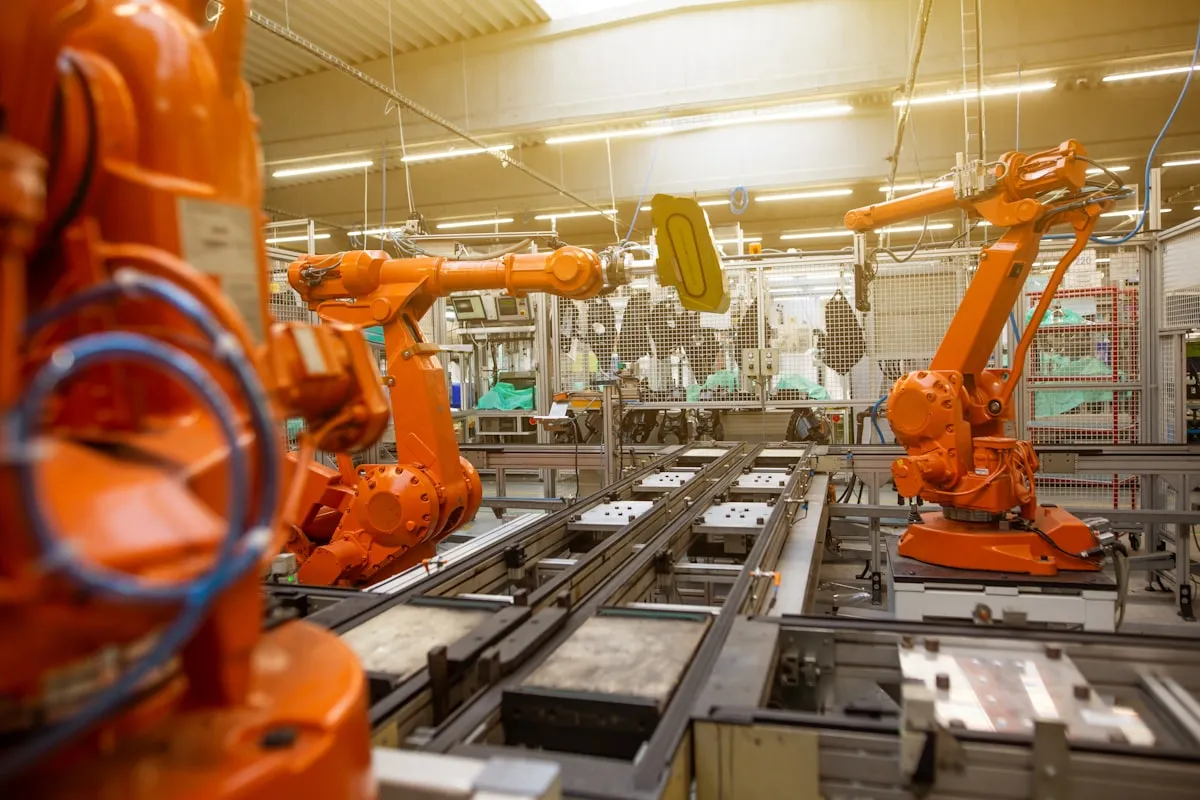
Manufacturing
Lights-out factories aren't a roadmap item anymore — certain automotive and electronics facilities run overnight without operators today. Landing AI and Cognex are deploying computer vision inspection at production line speeds, replacing statistical sampling with 100% inline defect detection. NVIDIA Omniverse and Siemens Xcelerator digital twins are moving from pilot programs into standard engineering practice for new line commissioning. The reshoring wave is generating greenfield factory deployments where Industry 4.0 infrastructure gets designed in from day one rather than bolted onto 30-year-old OT networks.
Explore
SaaS
The SaaSocalypse narrative is real and it is not done. Cursor with Claude built Anysphere into a $2.5B company selling to developers who used to pay for multiple separate tools. Bolt, Lovable, and Replit Agent are letting non-engineers ship MVPs in hours. Zero-seat software is emerging — AI agents as the only users of your API, with no human seat count to price against. The "wrapper problem" is killing thin AI wrappers with no moat. Single-person billion-dollar companies are no longer theoretical. Vertical AI is eating horizontal SaaS in category after category. And the great SaaS repricing is underway: customers are refusing to renew at legacy prices when AI does the same job for less.
ExploreNot sure which fits?
A 30-minute scoping call costs nothing. We will tell you exactly what to build and what it will cost — before any contract.